Early Draft Assessment
Clear, big-picture feedback on your cozy fantasy draft, so you know whether it’s working and where to start your revision.
Start your revisions in the right place with an expert manuscript evaluation.
Request a discovery callEvery Early Draft Assessment starts with a discovery call, so we can make sure it’s the right fit for your draft. Nothing is due at the call.
You can feel that something isn’t working
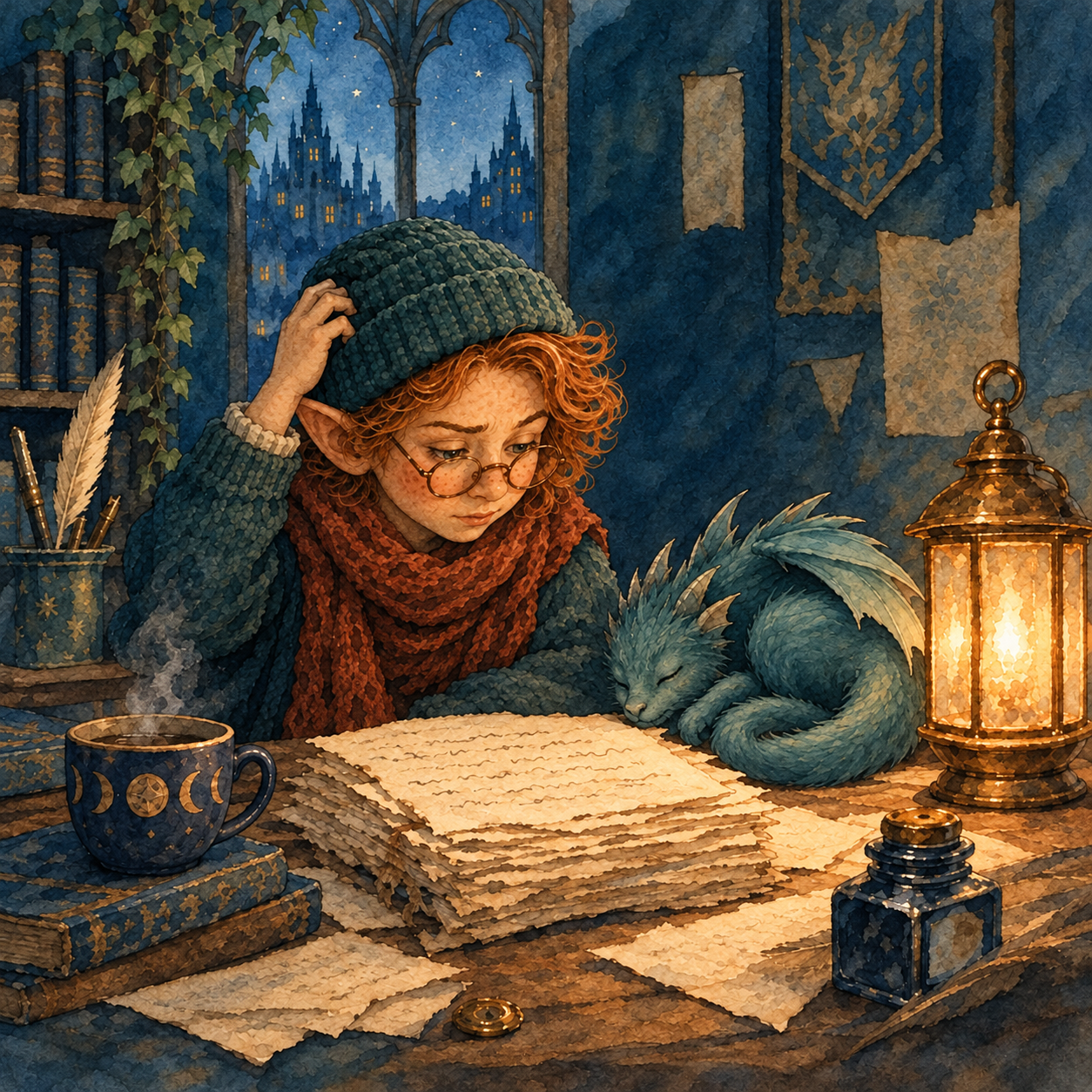
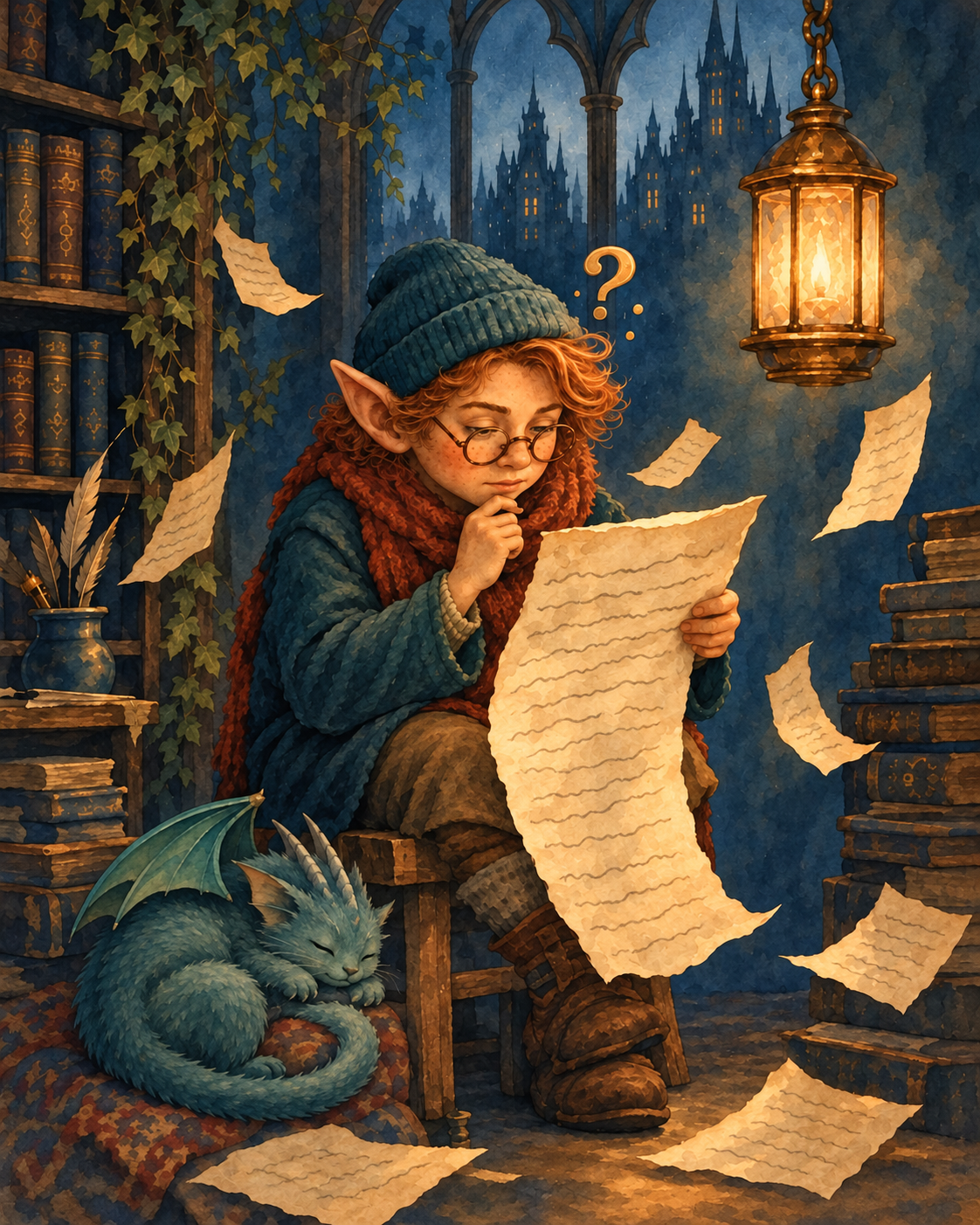
You have a finished manuscript (or a half-finished one), and you’re stuck. You can sense that something is off, but you can’t see it. Maybe the middle drags, or the transitional scenes give you anxiety because you worry they’re too boring, or you’ve realized your opening chapter is selling a different story than the one you ended up writing.
You’ve read it so many times that you can’t see past the words anymore, and you honestly don’t know if the story is holding together, whether your characters are engaging, or if you’re even starting in the right place.
Then there’s the sheer size of it. You know the big stuff should come first, but when everything feels like it needs attention, it’s hard to tell which problem is actually the big one. And if you don’t have many contacts in the writing world, you may not have anyone who can give you actionable feedback at all. Some authors stay stuck on a draft like this for years, simply because they don't feel confident moving forward.
Generic editing tools & feedback didn't help
Chances are you’ve already put real effort into figuring this out. You’ve downloaded the 3-act beat sheet and tried the reverse outline method. You've been googling things like, "how long should a chapter be," or "should I start my book 'in media res'." Now you're calculating where the inciting incident should land based on wordcount instead of considering if it truly pushes your main character down the right path in their character arc.
And then came the beta readers. Sometimes they have great insight, but sometimes you get feedback that conflicts, or readers who go chapter by chapter and tell you “this one reads better” without ever telling you whether the whole thing even makes sense. Like many writers, readers can often feel that something is off, but they may have a hard time pinpointing the issue.
Maybe you’ve looked at developmental editing rates and thought, I don’t have thousands to go throwing at developmental edits. And is it even ready for that level of scrutiny? You might have even considered running your draft through AI, and then wondered whether you could trust anything it told you about your story.
It’s hard to look at your own draft objectively
An early draft is hard to judge. They tend to be messy. In fact, they're supposed to be messy. Maybe you're still in discovery mode; learning who your characters are and what they need. This is the time to re-read and re-evaluate. But you've also got the story already in your head, so your mind can easily create the connections that aren't actually on the page.
You already know why the main character left in the night without so much a a letter to tell their best friend not to worry, they'll be back in a month. But can the reader see it?
Is the main character working well with her party, or are they stealing the spotlight? This can be particularly hard to see if you've grown fond of the cast.
And the one I've seen many authors struggle with: Is the conflict truly meaningful, or just exciting? A story without meaning is just a series of events.
Because you have the curse of knowledge, you may not see what's missing.
You may see things that aren't on the page because they're in your head. Or you may simply be too fond of the characters, setting, or events of your story to spot the flaws.
Where, oh where, to begin
The order of revision matters, too. If you start fixing sentences before you know whether the structure works, you can end up spending too much time on something you may ultimately delete because it’s not actually doing anything. Putting so much of yourself into the words just makes it that much harder to let go of them later. Not to mention that if you’re writing to a deadline or around a day job, you can’t afford to waste those hours revising the wrong thing.
Even professional help can miss at this stage. A full developmental edit on a draft that still has one or two big structural issues means paying for detailed notes on scenes, subplots, and characters that may not survive your next revision. Some feedback tells you what’s wrong without telling you how to fix it. Other feedback goes the opposite direction and tells you how to write the scene instead of what did or didn’t work and why, which can pull the story away from what you meant it to be.
What I love about early drafts
I love early drafts because that’s where all the potential is. The characters are still showing you who they are, the world is still taking shape, and the story could go in a dozen different directions. That’s also what makes an early draft so hard to revise. When there are so many possibilities, and so many things you could work on, it can be hard to know where to start.
A good story is far more important than perfect prose, so when I read an early draft, I’m not looking at your sentences. I’m looking for the top two or three issues that will make the biggest difference to the story, the ones the rest of the book depends on. Those are the issues I recommend focusing your first revision on, before you move on to more detailed help like beta readers or a full developmental edit.
For each issue, I explain why it matters to the reader and give you options for how to fix it. Most developmental editors decide what to fix and how to fix it for the author (with the best intentions, of course). But there are always multiple solutions to a story problem, and you know what will work best for your story, so you’re the one who chooses the direction.
The goal is a strong foundation for draft two.
When the big pieces are in place, your beta readers can react to the story you meant to tell, a developmental edit can go deeper instead of flagging structural problems, and your later revisions take less time because you aren’t rebuilding the book underneath them. Underneath all of it is one belief: your story deserves clarity, not a verdict.

Why I created the Early Draft Assessment
I’m a reader first. Cozy fantasy is my genre of choice right now, and I know the specific disappointment of a self-published book with real potential that doesn’t quite get there. I discovered developmental editing while at university, and I later completed the Author Accelerator Book Coach (Fiction) certification so I could help authors with the story itself.
The Early Draft Assessment came out of something I kept seeing in my editing work. Some clients came to me for a full developmental edit before their manuscript was ready for it. Often, a first or even second draft had one or two issues so big that I needed to stop my developmental editing work. Here are a few things I've seen:
The first half of the book was a totally different story than the second half.
The main character role shift to new characters late in the book.
There are too many stories happening in one book.
One manuscript I had the privilege of editing had a plot A, a plot B, two mirror plots, and three subplots. That’s a lot for readers to track (not to mention the writer). For this author, making the critical decision to focus on the plots that really mattered to the story was the first step. Any feedback I gave on the plots being cut was a waste of my time and their money. So I stopped my work and said, here are a few things that really need fixing first. Save your money now, and come back for the full edit after your next revision.
That conversation is what the Early Draft Assessment is built around. It’s the honest, big-picture read I want every author to have before they put months of revision (or thousands of dollars of detailed editing) into a draft.
I would much rather tell you early that your story needs a rethink than send you a long list of notes on scenes you’re going to cut.
The Early Draft Assessment
The Early Draft Assessment is a full manuscript evaluation, followed by an editorial letter that identifies two or three key issues that will make the biggest difference to your story, with suggested solutions for each one. It works on completed, near-complete, or half-done first or second drafts, and it takes 1–2 weeks.
What’s included
- A full manuscript evaluation
- An editorial letter identifying 2–3 key issues in your draft
- An explanation of why each issue matters
- Suggested solutions for each issue
What’s not included
This is high-level feedback, so a few things are intentionally left out. You won’t get in-manuscript comments, line editing, copy editing, or proofreading, and no coaching sessions are included unless you add one. You also won’t get notes on every scene or chapter. If you want in-depth, detailed feedback across the whole manuscript, a full developmental edit is a better fit for you.
How it works
A quick discovery call to see if I'm a good fit for your book. We'll meet for a vibe check and to discuss your goals and if this is the right service at the right time.
Send your manuscript with a synopsis or outline. The synopsis should describe what you want the book to be, not necessarily what it is now. This is what I measure your draft against.
Tell me about any specific concerns. If there’s something you want me to pay attention to (your opening, a character who isn’t landing, a subplot you’re unsure about), let me know and I’ll keep it in mind as I read.
I read the whole manuscript. I read for the reader experience: whether the story is holding together, whether the characters are engaging, whether you’re starting in the right place, and where a reader is most likely to lose interest.
You receive your editorial letter within 1–2 weeks. It names 2–3 big issues, explains why each one matters to the reader, and offers suggested solutions for each. There is usually more than one way to approach the issue, I'll tell you those options so you can choose what's right for your book.
If you’d like to talk it through, you can add a coaching session. This is a 60-minute call where you can ask your questions and we can brainstorm solutions together.
Why it’s set up this way
I ask for a synopsis of the story you want to tell because I’m not measuring your draft against my idea of a good book. I’m measuring it against your goals, which is how I can show you where the draft and your intentions have drifted apart.
I limit the letter to three issues because an early draft rarely needs a list of thirty problems. What it needs is a clear starting point. Three issues is enough to show you where to focus and few enough that you can act on them without feeling overwhelmed. If your draft has one problem so big that everything else depends on it, I’ll tell you that plainly.
I leave out in-manuscript comments on purpose. At this stage, line-level notes on scenes that might change or be cut would cost you money and attention without moving the story forward. Detailed feedback is far more useful after you’ve made the big decisions.
When your letter arrives, you’ll understand whether your early draft is working, and you’ll know early if you need a whole rewrite or major revisions. That means you can put your limited revision time where it matters most, and you may need less editing later because the next edit will be working on a stronger draft.
“I am so glad you took this on, and had no idea I would get such valuable feedback.” Judy G.
Is this right for you?
The Early Draft Assessment is a focused, high-level offer, so it works beautifully for some authors and isn’t the right fit for others. Here’s how to tell.
This is for you if:
- You write cozy fantasy or similar fiction
- You have an early draft and want to know if it’s working and what, specifically, is not working
- You're stuck on a draft and can't seem to finish it
- You’re having a hard time holding the whole story in your head
- You’re not ready for a full edit
This is not for you if:
- You want in-depth, detailed feedback
- You want in-manuscript comments
- You care more about prose than story
- You’re looking for a copy editor or proofreader
- You think this is the only editing service you'll need
To get the most out of this, you’ll need to be open to hearing that your draft may need significant changes, possibly even a rewrite. You’ll also need to be comfortable making decisions about your own story. I’ll suggest solutions, but you’re the one who chooses which direction fits, because you’re the one who knows what you’re trying to say.
The authors who get the most from this work tend to care more about whether readers fall in love with the story than whether every sentence is perfect. They’re ready to look at their book as a whole, they want to understand why something isn’t working instead of just being told that it isn’t, and they would rather know where their story stands before they put more hours into it.
Pricing and logistics
The Early Draft Assessment is $275. That’s faster and less expensive than most editing or coaching packages, because I focus on the few issues that will make the biggest difference instead of every page.
- Price: $275 due in full before I begin the work
- Timeline: 1–2 weeks
- Manuscript stage: completed, near-complete, or half-done first or second drafts
- What I'll need: your manuscript, a synopsis or outline of the story you want it to be, and any specific concerns
- Coaching sessions included: none
- Optional add-on (after your letter): a 60-minute coaching call to ask your questions and brainstorm solutions, $75 billed per session
To get started, book a discovery call.
We’ll talk about your draft and whether the Early Draft Assessment is the right fit. Booking a call is not a commitment; nothing is due at the time of the call.
Questions you might have
My draft is only half finished. Is it too early?
Not at all. The Early Draft Assessment works on half-done drafts as well as finished ones, and getting feedback at the halfway point can keep you from writing the second half in a direction that won’t hold up. Send me your synopsis or outline along with what you have, so I can see where you’re planning to take the story.
How is this different from a full developmental edit?
A full developmental edit goes deep across the whole manuscript, with detailed feedback on many issues. The Early Draft Assessment is a high-level manuscript evaluation: I still read the whole manuscript, but the letter focuses on the three issues that matter most right now. It’s a good option if you’re not ready for a full edit or you’re only looking for high-level feedback. Many authors find it makes sense to do the assessment first, revise, and then come back for a full edit on a stronger draft.
Why only three issues?
Your next revision needs a starting point more than it needs a long list. In my experience, an early draft usually has one or two issues so big that everything else depends on them, and fixing those first changes what the rest of the book needs. Three issues gives you clear priorities without burying the important ones under smaller notes.
Will you tell me how to fix it, or rewrite it for me?
I’ll give you suggested solutions for each issue, and where there’s more than one good way to solve a problem, I’ll tell you that. I won’t rewrite your scenes, and I won’t decide which version of your story is the right one, because you know what will work best for your story. If you want help choosing or applying a solution, the add-on coaching session is there for exactly that.
I’m worried an editor will edit out my voice.
This assessment doesn’t touch your prose. I’m looking at the story itself: the plot, the characters, the structure, and the reader experience. Your sentences, your humor, and the way you describe your world stay entirely yours.
How do I know your feedback will add real value?
That’s a fair question, and you should ask it of any editor. Every issue I name will be specific to your manuscript, tied to actual scenes and characters, with an explanation of what it costs the reader and suggested ways to address it. You won’t get generic advice you could have found in a craft book. I’m a certified fiction book coach through Author Accelerator, and I read cozy fantasy for the same reasons your readers do, so I pay close attention to the things that keep them turning pages.
What if I don’t agree with your feedback?
You have the final say. My letter is a clear perspective from a trained editor, not a verdict on your book. If something I’ve named doesn’t fit the story you’re trying to tell, that’s useful information too, and it’s often a sign that the synopsis and the draft are pulling in different directions. If you’d like to talk it through, you can add a coaching session.
Will you be honest, or just nice?
I’ll be honest, but I'll do it nicely. If your draft needs a major rewrite, I’ll tell you, and I’ll explain why. I’ll also tell you specifically what’s working, because knowing your strengths is just as useful when you revise. I don’t give vague praise, so when I say something works, you can trust that I mean it.
What happens after I get my letter?
You’ll have three clear issues to work on and a good sense of where to start your revision. Some authors take the letter and revise on their own. Some book an add-on coaching session to brainstorm solutions before they dig in. And some come back for a full edit after their next revision, once the big issues are sorted.
What authors say
“I agree with everything you said, and will take your advice over and over. … You gave me the critical look I needed. I realize I have some work to do and your assessment gives me some clear and concise direction.” Judy G.
If you have an early draft and you want to know whether it’s working and what, specifically, isn’t working, the Early Draft Assessment is a good place to start.
Request a discovery callIf you’re not sure your draft is ready, or you’re not sure this is the right fit, send me a note at kat@plotsandparchment.com and tell me about your story. I’ll give you an honest answer, even if that answer points you to a different option.
How I use technology with your work
Your manuscript is your work, and I handle it with privacy and security in mind.
- No AI with your writing. I never put your manuscript, or any part of it, into generative AI tools or large language models.
- Stored offline. Your files stay on my local drive, with a backup on a thumb drive. I don’t use cloud storage unless you’d rather share through Google Drive.
- Deleted when we’re done. Once our work together wraps up, I delete your manuscript from my computer and my backup.
- Assistive reading. I use Natural Reader to read text aloud. It isn’t AI, and it never uploads files. Everything stays on my computer.
- Call notes. With your permission, I use Google Meet’s AI to take notes and summarize our calls. If you’d rather I didn’t, just say so.
- Where else I use AI. I use generative AI for work that has nothing to do with your writing, like marketing, website upkeep, and admin tasks.