You finished the draft. Now you can't tell if it works.
You've read it twice. Maybe three times. Your beta readers said "I liked it" or sent back five opinions that don't agree. You've watched the craft videos and read the books, and you still can't tell whether the opening drags, whether the stakes land, or whether book two is set up to pull readers in.
Meanwhile, the next release is due, and you don't know where to start revising. Or if you'll hit your publishing deadlines.
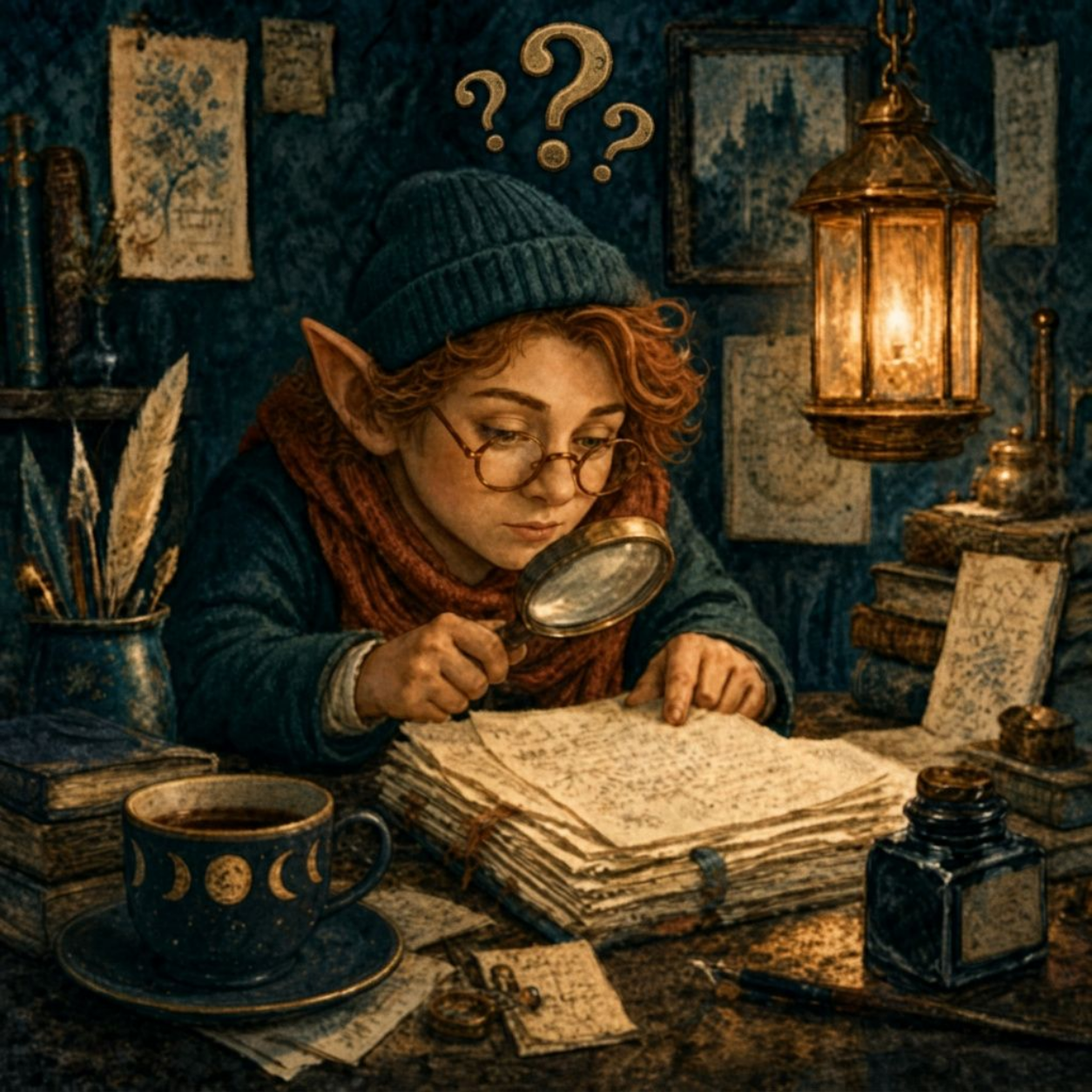

Hi, I'm Kat. I help self-published cozy fantasy authors revise their manuscripts with intention, so readers finish book one and come back for book two.
I've spent a lifetime on the reading side
Sure, I’m an editor—trained and everything. More importantly, I'm a reader. I've spent my life curled up with a book every chance I get, and cozy fantasy is my current obsession.
I love living in these worlds. Not just the big magic system reveals, but the everyday magic that keeps the tea warm or dries you off after the rain (which would be wildly helpful in Portland). I love watching characters solve problems that are my size: asking for help, setting a boundary, staying close to the people who make them feel safe. And I love the cozy contract. The stakes are real, sometimes stressful or sad, but I know it's going to work out. Maybe not the way I expected, but it will.
I also love the trend toward self-publishing, which opens the gates to more variety and diversity in the stories told. So when a self-published cozy fantasy book falls apart, it bothers me. Not because the author isn't talented. Because I can see exactly what it could have been. I can see where the readers are probably dropping off and how it could have been tweaked to keep them.
Here are some examples from books I’ve actually read. Or at least tried to read:
 A magic baking competition book I DNF'd. The only obstacle the main character ever faced was her own self-doubt. Every other character thought she was amazing, and every bake turned out perfect. Self-doubt is a real arc, but it falls flat when it's the only thing happening for three hundred pages and there’s no evidence to support the emotion. Without real stakes, I stopped caring what happened next.
 An ARC read that opened with a charming village scene. Then the main character walked past one shop, which triggered a flashback, and the story stopped for two full CHAPTERS of backstory. I never found out what the story was actually about.
 A book where something happened on every page. It was technically high stakes. But nothing was changing for the main character, and it read like boxes being checked on a beat sheet. I gave up about halfway because honestly, so what? Stuff happens and then more stuff happens is not a story.
Almost every one of those books had good ideas, real heart, and characters I wanted to root for. What they needed was one solid, story-focused round of revision. The gap between what a manuscript is and what it's capable of is the thing I care about closing.

What I know as a reader (and what it means for your revision)
Readers don't leave because the words on the page aren’t clever or pretty. They leave because the story doesn’t pull them in: a protagonist with nothing to push against, a world that stops the plot to explain itself, scenes that don't move things forward. And I get it. It’s really hard to see those things from inside your own draft, because you wrote every word of it. You’re too close and maybe too attached.
It's also why beta readers rarely solve it. They can tell you a scene dragged, but most of them have never been taught why. So you collect reactions and opinions without evidence or advice, and every round of feedback adds more noise.
What you've probably tried already
Beta readers. Critique partners. Craft books, podcasts, and YouTube. Maybe a budget editor, or an edit of just your first chapter. All of it gave you information, and none of it looked at your whole manuscript and told you, in plain English, what's actually happening in it.
How I work
I read the whole story with fresh eyes and name the top three to five story-level issues, explain why each one matters to your reader, and lay out real options for fixing it. There's almost always more than one valid fix, and only you know which one is true to what you're trying to say. So you choose the direction, and I show you how to apply it.
Then you do the revision, with my feedback on a few chapters. You walk away with a stronger manuscript and a new skill to help you write and revise the next one yourself. My feedback is honest without being harsh. I start with what's working, I'm specific about what isn't, and I always explain what it costs the reader. And you make the call, so it stays your book the whole way through.
Why trust me with your story
I’ve got a couple certifications (namely Author Accelerator and ClubEd) and even a communications degree where I studied advanced editing, including developmental editing, but so what? There are plenty of certified editors in the world. The key is finding the one that gets you and gets your story. Bonus points if they obsessively read whatever genre you write in.
So why me specifically? I edit with the reader's experience in mind. Not the craft “rules.” Not the beat sheet or the formula. Every note I give is framed around what the reader experiences, because that's the side that actually matters. You want readers to come back for book 2, series 2, and on and on. It doesn’t matter how many books you publish if the reader doesn’t finish whichever book they happen upon first. And here’s the biggest secret: it doesn’t need to be perfect. You don’t need to fix everything. Just the stuff that will lose readers.
I’ll help you see where readers might get confused, frustrated, or bored and fix it. I won’t fix it for you, I’ll help YOU fix it so that you understand what you’re changing and why and how to do it from the start on your next book. With each book you write, you’ll get better at spotting and fixing story-level issues. With each book we edit, we’ll catch something new and you’ll learn a new skill that improves the current book and all those that follow.
The other side of revision
When this goes well, it looks like this: you open your manuscript knowing what it needs and why. You move past overwhelm and revision paralysis because you know where to start and what to focus on. And a reader finishes your book, closes it with that "I can't wait for the second book" feeling, and goes straight to buy the next.
That's the DNF pile turned into a series people stay up for.
A few things about me

- I can’t read epic fantasy anymore. Real life is already too stressful and let’s face it, I'm too old to save the world from certain doom. The chosen one is always like 14 anyway. I’m too old for this shit—give me a cup of tea and a cat dragon in a potion shop where the struggles are small but real.
- I read mostly cozies and especially cozy fantasy. Give me a slice of life, a cozy quest, a mystery, or even the occasional off-beat romance.
- Lately, I also love LitRPG which is sort of epic but generally much more fun (have you met Princess Donut?).
- My cats’ names are Mischief and Mayhem, but Mayhem responds to “baby” because she’s just the sweetest little baby and possibly I tell her so several times a day.
- I don’t care about prose… there I said it, and I meant it. I’ve read multiple series with mediocre writing because I liked the characters and the story was good. I don’t judge the writing or even the grammar, those don’t make or break the story unless it becomes actually unintelligible. (At which point I will suggest fixing it.)
Where to go next
If you've read this far and thought "that's my manuscript," I'd like to hear about it. Schedule a free 20-minute discovery call to see if I’m a good fit for your story.
Let’s chat.What's the part of your manuscript you most want a second set of eyes on?
How I use technology with your work
Your manuscript is your work, and I handle it with privacy and security in mind.
- No AI with your writing. I never put your manuscript, or any part of it, into generative AI tools or large language models.
- Stored offline. Your files stay on my local drive, with a backup on a thumb drive. I don’t use cloud storage unless you’d rather share through Google Drive.
- Deleted when we’re done. Once our work together wraps up, I delete your manuscript from my computer and my backup.
- Assistive reading. I use Natural Reader to read text aloud. It isn’t AI, and it never uploads files. Everything stays on my computer.
- Call notes. With your permission, I use Google Meet’s AI to take notes and summarize our calls. If you’d rather I didn’t, just say so.
- Where else I use AI. I use generative AI for work that has nothing to do with your writing, like marketing, website upkeep, and admin tasks.