Book coaching for cozy fantasy authors who want to fix their own draft
I'll help you see past the words to what isn't working, why it matters, and how you want to fix it—fast.
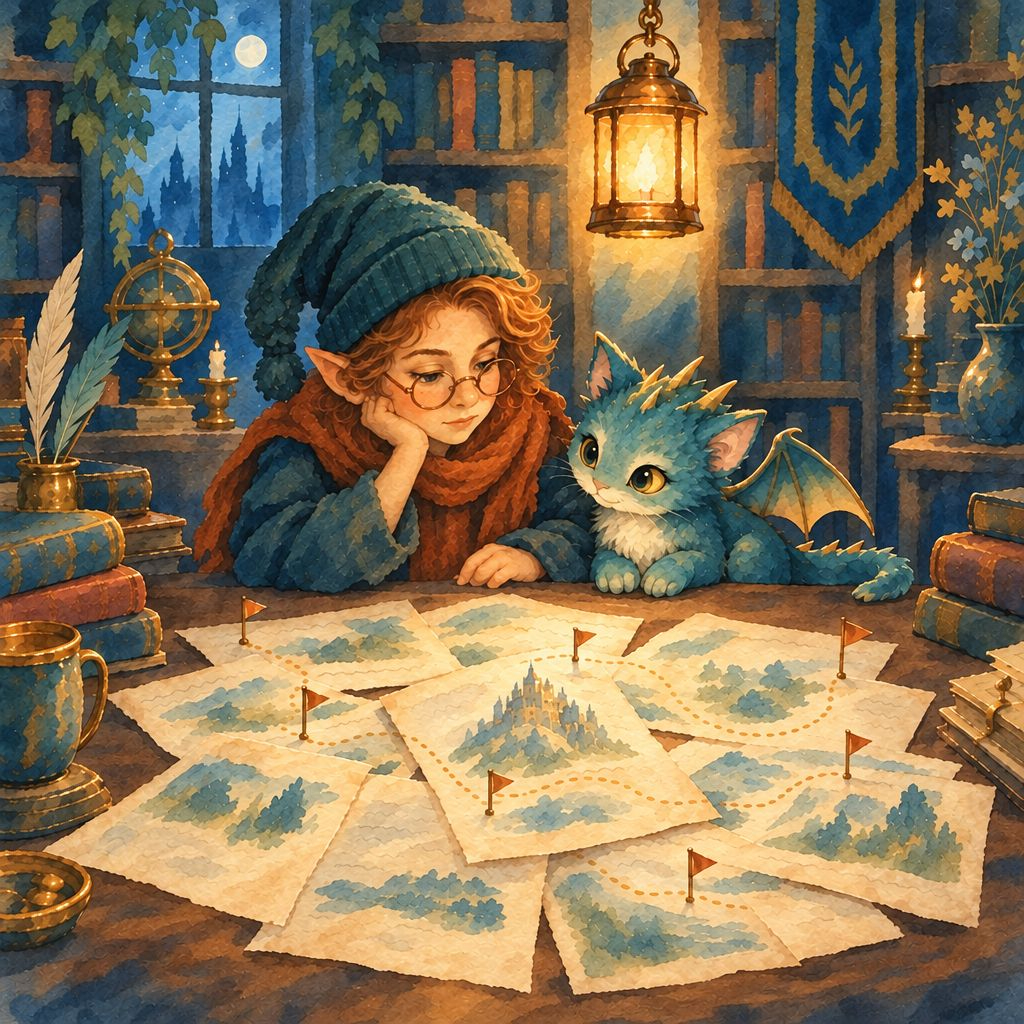
You finished the draft, or most of it, and now you're looking at a manuscript you can't quite see anymore. Maybe you sense something is off but can't name it. Maybe you've heard that the middle sags or the stakes feel thin, and you have no idea where to begin. Maybe you know exactly what's wrong and can already tell that fixing it will ripple through the whole book, and you’re overwhelmed just thinking about it. However it shows up, the feeling underneath is usually the same: my book is huge, and I don't know where to start.
So now you’re looking for developmental editing services, or some kind of clear direction, but you don’t even know where to start.
If you’re on a publishing deadline, there's a good chance you're also trying to do this on a schedule that doesn't leave much room. If you have a day job and only write a few hours a week, you can't afford to waste them on a revision that turns out to be the wrong one.
You might be working on your ninth page of editing notes, or your tenth full draft, or toggling between three different plotting systems (stop that, please). You might be afraid that the scene you love is the one that has to go. You might also be quietly wondering whether you can trust yourself at all, because the line between what's actually on the page and what only exists in your head gets more blurred the longer you keep staring at your manuscript.
None of that means you're a bad writer. It just means you're too close to the story, which happens to every author, and it's the exact reason you need a set of fresh eyes on your book.
The craft advice or feedback you’ve gotten hasn’t helped
Chances are you've tried most of the usual options, and some of them helped a little. You've read books like Save the Cat! Writes a Novel, by Jessica Brody, or Lisa Cron’s Wired for Story, you’ve listened to the Fiction Writing Made Easy podcast, and watched Abbie Emmons YouTube channel.
What do all these have in common? They give great writing and editing advice! Unfortunately, none of them have your manuscript. They don’t know your story. They haven’t met your characters or lived in their world. A book or video can tell you that your protagonist needs agency. It can't tell you which scenes or characters in your book are taking it away from them.
So you send your book off to a few beta readers… and get feedback that conflicts, or feedback that says your second draft "reads better" without telling you whether the whole thing makes sense. If your early readers followed along chapter by chapter, they may have gotten so familiar with the material that they stopped noticing the shape of the story.
Perhaps you've hired an editor who handed back a report and left you to figure it out alone, or one who told you exactly how to rewrite a scene in a way that isn’t what you envisioned. Some of you have turned to AI tools and felt uneasy about how much to trust them. Others have spent money on editing rounds and now wonder, in the words of one author, whether "those people are just there to take my $$$."
If any of that sounds familiar, you haven't been doing it wrong. The options available just aren't meeting you where you are.
Revision is hard for reasons that have very little to do with talent
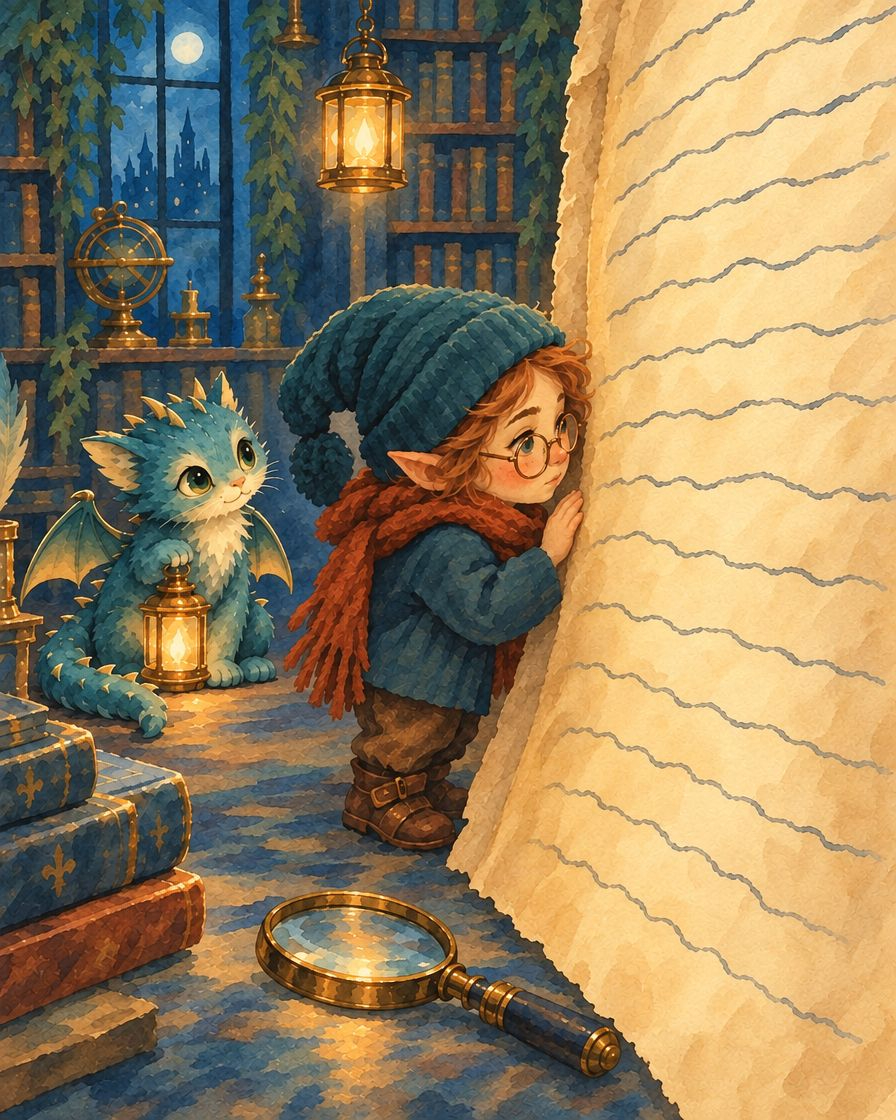
The biggest problem is that you can't see the story's shape until after you've drafted it, and by then you're too close to the details to see the big picture clearly. What you meant to put on the page and what's actually there are often two different things, and you're the one person who can't tell them apart.
The second problem is order. Most authors fix what they notice first, which is usually prose, because prose is staring back at you from the page. But polishing sentences in a scene you may later cut is just productive procrastination, and a great way to lose days or weeks. Spending too much time on something also makes you more attached to it, which makes it harder to let go.
Third, the industry has a habit of treating perfection as the price of entry. Self-published books carry a reputation for being low quality, and, if we’re being honest, that reputation is sometimes earned, often because the big-picture editing got skipped. But the answer isn't to chase a flawless manuscript for another year. Plenty of authors end up fixated on "revise, revise, proofread, perfect" and fall behind their own release timeline without ever getting closer to done. A good story matters far more than perfect prose, and readers of cozy fantasy will forgive a clunky sentence long before they forgive a main character who never has to make a hard choice.
Here’s what I believe
Your story deserves clarity, not a verdict.
Most developmental editors work from the best intentions, and most of them work the same way: they read your manuscript, decide what needs to be fixed, decide how to fix it, and send you a report instructing you to do so. The trouble is that almost every story problem has more than one good solution, and you are the person who knows which one fits your book. You know which character you're building a series around, which emotion you're trying to land, and what promise you made to the reader in chapter one. You also know what tradeoffs can be made to hold the series together without delaying your next release date. An editor working alone can't know all of that, no matter how skilled they are.
So I work differently. I read your whole manuscript and tell you, specifically and about your story, what's working and what isn't. Then, instead of choosing for you, I lay out the real options for fixing each issue and we talk through them together. You decide. After that, I show you how to apply the fix inside your own chapters, with examples and comments right in your manuscript, so you can see exactly how it shows up on the page and then carry it through the rest of the book on your own.
I focus on the three issues that impact reader experience most, because in most manuscripts a handful of big problems account for the bulk of the revision work. Fixing those first, in a sensible order, is faster and kinder to your budget than trying to touch everything at once. I also explain exactly why it matters, so you learn from each fix, and start your next book with fresh eyes. A few critical issues gets most books to an enjoyable point, so that’s our focus. Readers will ignore small issues if the big stuff is solid.
I’m a reader first
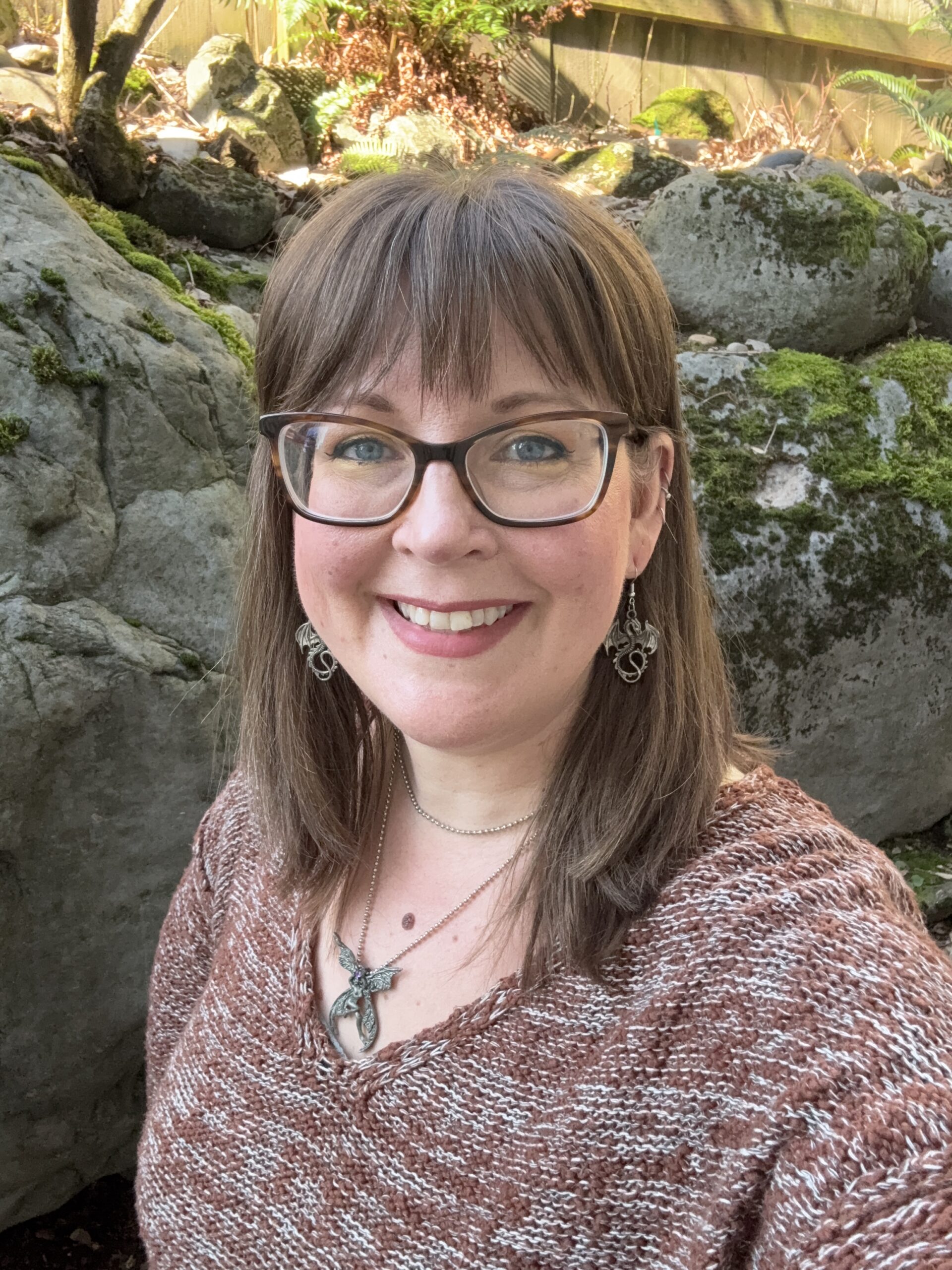
Have I introduced myself? I'm Kat, and I'm a reader first. I especially love cozy fantasy, and I want more of it in the world. That's the whole reason I do this work. I've also watched too many self-published books with real potential fall just short, with stakes that don't matter, conflict that feels manufactured, or a plot that keeps happening without ever going anywhere. Often the gap between the book that got published and the book it could have been is one honest, whole-story read away.
I learned developmental editing at university. And my first few edits followed the standard model: I read the manuscript, diagnosed it, decided what I thought was best, wrote it up, and sent it off. When I went through the Author Accelerator book coaching certification program, I had a chance to coach an author after completing my edit. I noticed a problem I couldn't ignore—the choice I made wasn't the choice she would have made.
In this case, a mystery character kept swooping in at key moments to save the day. That took agency away from the main character and made everything too easy, which sucked all the excitement out of the action. It felt as if the author was using this character as a plot device, and it was an easy choice from my perspective. I recommended cutting him entirely. On our follow-up call, I learned he was her favorite character, and that she planned to write the next book about him.
Knowing that, my advice changed completely. I would have told her to write him more fully into the story without letting him steal the glory, which is a very different edit with different examples and different comments in the margins. All that work I put in making comments and edits was wasted. Since she was a practicum client, she hadn’t paid, but if she had, it would have been a waste of her money too! That conversation is where my approach came from. I stopped handing authors a verdict and started giving them the full range of options, then helping them execute the one they chose.
I want authors to have insight and agency from the start: feedback that fits their goals and an editor who asks what they want before telling them what to do. I want you to be confident as you revise and when you publish. (Also, I’m running out of books to read and need to get you all to publishing!)
Here’s what you get
My Guided Revision coaching package is for authors with a finished or nearly finished draft who feel stuck. You don't know where to start revising, or you can't figure out what's wrong, or you know what's wrong and have no idea how to fix it, and you don't want to rewrite the whole thing.
By the end, you'll understand exactly what the main issues in your manuscript are, why each one is a problem, and how to fix them. You'll be able to spot them in your own work and have practical experience applying the solutions in chapters of your own book and the confidence to apply the changes across the full manuscript. You'll also know why these issues matter, so you can carry that knowledge into your next book.
How it works
- Editorial letter (3 to 5 issues)
- You choose 3 issues to focus on and the solution for each
- 3 chapters per issue
- 3 revision coaching sessions
- You finish revisions
- Move on to proofing or line edit
- Ready for publishing
- Initial assessment.
I read your full manuscript and write an editorial letter that identifies three to five key issues, prioritized based on what will most impact the reader experience. For each one, I give you multiple solutions, so you can choose what’s best for your timeline and your book. I’ll send you my assessment before our first coaching session so you have time to consider your options.
- Coaching session 1: decision-making (60 minutes).
We go through the top issues I saw and the possible solutions together. You choose the three issues you want to focus on, and a solution for each of them, based on what you want this book to do and your publishing timelines.
- Guided application.
For each of your selected issues, I comment on up to three chapters (maximum nine chapters in total) to show you on-page examples of the issue. The comments sit inside your manuscript and show you how to apply the solution, with examples and explanations. I will send you the chapters for one issue before I move onto the next. So you can start revising Issue #1 while I prepare the chapters for Issue #2, and then Issue #3. I’ll choose the chapters that best illustrate the issue or the solution. They may not be consecutive and may be from the beginning, middle, or end.
- I give you 3 chapters for 1 issue
- You begin revisions
- Send me 1 revised chapter for review
- 30 minute revision coaching call
- Sessions 2, 3, and 4: revision coaching (30 minutes each).
These sessions will be scheduled based on the initial timeline we set, giving you clear deadlines to complete your review of my edits as well as the revisions to at least one chapter. You’ll send me one chapter to review at least a day ahead of the coaching call. We’ll use the session to talk through how it went, what's working, and what to adjust.
- After the final session.
You apply everything you've learned across the full manuscript, with the plan we built together.
Timeline and logistics
The package runs a minimum of four weeks and up to three months. We set the schedule together around your day job, your release dates, and whatever else is going on. We’ll set deadlines for my edits and your revisions, so you can plan ahead. Be sure to plan time to apply the revisions across the full manuscript as well.
You'll see everything the whole way through. There is no blind report at the end. I'm also happy to answer quick questions by email along the way, though I can't offer unlimited back-and-forth.
What's not included
I want you to know exactly what you're buying, so here's what this package leaves out. It doesn't include copyediting, line editing, or proofreading. I won't rewrite your chapters for you, and I won't mark up the entire manuscript, since the detailed feedback covers up to nine chapters and you carry the rest forward yourself. We can add additional coaching for the same issues or work beyond the three chosen, but that’s an add-on.
Add-ons (available after the package is complete)
- Additional coaching session: a 30-minute call for implementation questions or stuck points on the same issue, billed per session.
- New issue coaching package: for issues four and five, you can add on a 30-minute decision call to choose an approach, three chapters with detailed in-manuscript feedback, and a 30-minute coaching follow-up, delivered in the same stages as the first three.
Why this structure helps
Most developmental editors deliver a manuscript with a thousand comments and a report to go with it, the decisions are made for you, but you’re left to sort out the rest on your own. Here, you're part of the whole process. You see the solutions, the examples, and the feedback on your own revisions, and you learn why things work or don't along the way. And because we focus on the top issues, revision is faster and more affordable than a complete developmental edit.
Answer some questions about your book, timelines, and goals, then pick a time for a discovery call to get started.
This is for you if you write cozy fantasy, and you want to improve both your writing and your editing skills with each book you finish. It's for you if you want to steer the ship during revision, and you're having a hard time seeing past the words on the page. It's also a good fit if you want to focus your revisions on the reader experience, meaning what a reader feels, expects, and remembers when they close the book.
This is not for you if you care more about prose than story. A beautiful sentence matters, but this work is about whether the story holds together and keeps readers turning pages. Prose polish comes later. It's also not for you if you want someone to tell you how to write your book (no shade if you do, plenty of authors prefer that, and there are good editors who work that way). And if you're looking for a copy editor or a proofreader, this isn't the right service, though I'm glad to say so up front so you don't spend money on the wrong thing.
What you'll need to be open to. The feedback is honest and specific, and some of it may point at scenes or characters you love. I'll always explain why, and I'll offer options, but you'll need to be willing to consider that something you're attached to might not be serving the story. You'll also need to do the revision work between sessions. I'll guide you, but I won't do it for you; the learning comes from your own hands on your own chapters.
Who tends to succeed. Authors who do best here are curious about craft and want to understand the why behind a fix. They're comfortable making decisions once they can see their options, and they'd rather learn a method than simply follow instructions. Many of them are balancing a full schedule and a series plan, and they value a process that respects their time.
The Guided Revision coaching package is $1,650 for manuscripts up to 80,000 words. Longer manuscripts are priced individually, and we’ll talk about it on the discovery call. You pay 50% to begin, and the rest in three equal payments, one before the work begins on each set of chapters.
How to get started
- Fill out the project form.
It takes 5–10 minutes. It covers your publishing goals and timeline, your synopsis, whether the book is part of a series, the feedback you’ve already received, what matters most to you in this book, three to five comps, your approximate word count, and your availability over the next three months. It helps me come to our call prepared, and it helps you decide whether this is the right fit before we talk.
- Book a discovery call.
After you submit the form, you’ll see a scheduling calendar. We’ll talk about your book, your goals, and how the process works, and you can ask me anything. If we both decide it’s a good fit, we move forward. If it isn’t, I’ll tell you straight and point you to a better option when I can.
- Review your proposed schedule.
I’ll use your form answers to propose dates for your coaching calls and revision deadlines. You can ask for changes, so the schedule fits your day job and your release plans.
- Sign the contract.
I’ll send a short contract with the schedule, scope, and terms. You can read it all before you sign.
- Send your deposit and manuscript.
Once the contract is signed, you’ll pay the first half of the package price and send me your manuscript. If you book more than 30 days in advance, a $100 non-refundable booking fee holds your spot and counts toward the package price. The timeline starts when I have both your payment and your manuscript.
Answer some questions about your book, timelines, and goals, then pick a time for a discovery call.
Common questions and concerns
How is this different from a full developmental edit?
A full developmental edit usually means the editor reads your whole manuscript, decides what needs to change, leaves comments throughout your manuscript, and returns an editorial letter explaining their edits. My Guided Revision package starts the same way, with a full read and an editorial letter. You decide which solutions you want to apply (up to 3 issues). From there, I give detailed comments on up to nine chapters I select to show each issue, and we meet to talk through your options and your revisions. You do the rest of the revising yourself, using what you’ve learned. It’s a good fit if you want to understand how to fix your story and apply the fixes yourself. It’s a weaker fit if you want every chapter marked up. Not sure which you need? Tell me about your book and yourself, and I’ll tell you straight.
I'm worried you'll tell me my book isn't good.
Listen, a first or early draft isn’t supposed to be “good,” and that’s not even what I’m looking for. I read for what is working as well as what isn't, and I tell you both. You'll get feedback about your story, not a commentary on your talent, and you'll get options for what to do next. One of my first clients put it this way: she got the critical look she needed, but “it didn’t feel bad.”
What if I don't agree with your suggestions?
Then you choose differently. That's the point of the process. I offer multiple solutions for each issue, and you pick the one that fits your book. If it’s not a suggestion I made, I will still help you apply the edits following the process outlined above. You know your story, and I'll adapt the examples and comments to the direction you choose.
Do I have to work on the issues in the order you rank them?
No. I rank them by how much they affect the reader experience, but you choose which three we work on, based on your goals and your release schedule. I let you choose the three issues we’ll focus on for two reasons. First, you may feel you can handle one of the top issues on your own, without my coaching. Second, you may decide to forgo an issue that I deem top three, and it’s your right as the author to do so.
How do you choose which chapters to comment on?
For each of the three issues you choose, I pick up to three chapters that best show the issue or the solution. They may not be sequential, and they might come from the beginning, middle, or end of your book. My comments show you how the issue appears on the page and how to fix it using the solution you picked. You can then use those examples as a model for the rest of the manuscript.
I don't know what's wrong with my manuscript, only that something is.
That's the most common starting point, and it's what the editorial letter is for. I name what isn't working and explain why, so you can stop guessing and start revising the right things.
I know what's wrong but I can't figure out how to fix it without breaking everything.
The guided chapters are built for this. I’ll point out how the issue shows up in your manuscript and give specific examples of how to fix it. Once you’ve made some edits, I’ll give you feedback on whether they were effective or what you might still want to tweak.
I can't afford a big editing bill, and I'm wary of paying for help that doesn't deliver.
I find a few critical issues tend to account for most of the revision work and the biggest improvement on reader experience. This package focuses on three top issues, so your money goes where it matters most. You also see the work as it happens, so there's no mystery about what you're paying for. The feedback comes from me, a human editor, and I'm happy to talk through whether it's the right fit before you book and pay.
How does payment work?
You pay half the package price to begin, then the other half in three equal payments, one before I begin work on each set of chapters. For a manuscript up to 80,000 words, that’s $825 to start, then three payments of $275. Longer manuscripts cost more, so we’ll confirm the exact amounts on your discovery call and in the contract.
Can I pay over time?
Yes, in two ways. The second half is already split into three payments. If your start date is a few months out, you can also make smaller payments toward the first half. If you know you’ll need to revise in six months, you can book now and start paying today.
What’s the booking fee?
If you book more than 30 days before I begin the initial manuscript assessment, I ask for a $100 non-refundable booking fee to hold your spot. It counts toward your first payment, so it isn’t an extra cost.
How do I know when I'm done?
We define "good enough" together, based on the reader experience you're aiming for. When the top issues are resolved and the story does what you promised readers it would, you have a clear finish line and the confidence to release.
I'm writing a series, or I'm on a rapid-release schedule. Will this fit?
Yes. The timeline flexes around your release schedule, and you tell me up front if the book is part of a series so I can read with that in mind. Keep in mind you also need to plan time to complete the full revision and any line editing or proofreading you plan to have done.
Do you do line edits or proofreading?
No. I am not a copy editor or proofreader and do not sell those services. I specialize in big-picture story work. When you're ready for line editing and proofing, you'll be moving back to the words with a stronger story underneath.
Can I email you with questions between sessions?
Quick questions, yes. I usually reply within 2 business days. Long back-and-forth threads aren’t usually very helpful, which is why the coaching sessions exist. If a question needs more room, save it for our next call.
What platform do the calls use, and what file format do you need?
We meet on Google Meet, and I can send you a recording if you’d like. I work in either Google Docs or Word (your choice), and I leave comments directly in your manuscript.
How long until I get my editorial letter?
I will send your letter at our agreed upon deadline, which we’ll set before we start, as long as you’ve signed the contract and sent your deposit and manuscript. I always send it before our first session so you have time to read it and think about your options.
What if I need to pause or reschedule?
Life happens, especially with a day job and a release schedule. We set deadlines together, and you can reschedule with 24-hour notice. If you need a longer pause, we’ll talk about what makes sense. Cancellation and refund terms are in the contract, and we’ll go over them on your discovery call.
If your manuscript is finished or nearly finished and you're ready to see what's actually on the page, I'd love to read it. Fill out the short intake form below and tell me about your book, and we'll talk about whether this package is the right fit.
Tell me about your bookAnswer some questions about your book, timelines, and goals, then pick a time for a discovery call to get started.
If you have questions first, email kat@plotsandparchment.com and I'll answer what I can.
How I use technology with your work
Your manuscript is your work, and I handle it with privacy and security in mind.
- No AI with your writing. I never put your manuscript, or any part of it, into generative AI tools or large language models.
- Stored offline. Your files stay on my local drive, with a backup on a thumb drive. I don’t use cloud storage unless you’d rather share through Google Drive.
- Deleted when we’re done. Once our work together wraps up, I delete your manuscript from my computer and my backup.
- Assistive reading. I use Natural Reader to read text aloud. It isn’t AI, and it never uploads files. Everything stays on my computer.
- Call notes. With your permission, I use Google Meet’s AI to take notes and summarize our calls. If you’d rather I didn’t, just say so.
- Where else I use AI. I use generative AI for work that has nothing to do with your writing, like marketing, website upkeep, and admin tasks.